


PANELS
AND
SPEAKERS


Panel 1
Re-booting the Professional Learning Community (PLC) to create equitable, sustainable and effective approaches to job-embedded math learning with colleagues
Professional Learning Communities have been around for a long time and have taken many forms. However, what is the evidence that they can change teachers’ math practice? Some experts have called into question PLCs’ ability to change teacher math practice without a simultaneous effort to help teachers examine their beliefs and assumptions about student learning and rebuild a stronger mathematics teaching practice that better serves a diverse range of students. Some newer designs for professional learning provide ongoing opportunities for teachers to learn with colleagues in their own schools and from their own students through lesson study, learning labs, studios, video clubs, etc. How can we redefine organized learning with colleagues with the aim of focusing on the challenging work of critically examining math instructional practices and students’ learning experiences? This panel will highlight possible models for teachers’ job-embedded math professional learning.

Assistant Professor
Boston University Wheelock College of Education & Human Development



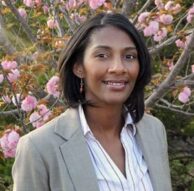
Assistant Professor of Mathematics Education
Georgia State University, College of Education & Human Development
Panel 2
New curriculum, new teacher learning: Reimagining mathematics teacher learning to broaden participation in the math of the future
A recent MIT report on the Work of the Future found that while technological innovation surrounding automation would wildly transform the labor market, the economic “fruits” of this innovation would be vastly unequally distributed or “so skewed towards the top, that the majority of workers have tasted only a tiny morsel of a vast harvest." Given wide opportunity gaps in access and inclusion in higher level mathematics for students from the priority community, how can we ensure that students from the priority community do not get left behind? This panel will focus on how to redesign curriculum to engage students from the priority community in the math of the future and what teacher professional learning and labor market changes must be put in place to implement such an initiative. Panelists will discuss what curricular design and redesign should take place to integrate mathematics into other STEAM disciplines such as science, maker spaces, robotics, computer science and coding and the implications for teacher preparation and professional learning.
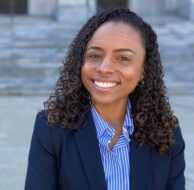


Research Professor and Associate Director of the CS Undergraduate Program at Brown University, Co-Director of Bootstrap
Brown University, Bootstrap
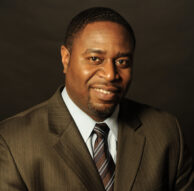

Panel 3
If teachers matter most, what about teachers matters?: Exploring the role of non-instructional predictors of math teacher instructional outcomes
To the practitioner or the parent, it may not come as a surprise that decades of rigorous research in economics point to teacher quality as the single largest predictor of student achievement gains above other school characteristics, particularly for students of color. However, in breaking down “teacher quality” there are some outstanding puzzles. For instance, years of preparation, teacher degrees and advanced course work are relatively weak predictors of math teacher effectiveness. The field stands to learn much about what non-instructional factors predict math teacher effectiveness; little is known about the relative importance of teacher beliefs about their own abilities, teacher expectations for students, teacher agency, teacher satisfaction, and retention, etc. This panel focuses on shaping a research agenda that would help the field better understand malleable, non-instructional predictors of math teacher learning. Panelists will focus on reviewing what is known, unknown, how to learn more, and implications for targeting new kinds of professional learning.




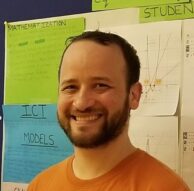
Panel 4
The power to change the equation: Professional learning and equity teaching practices in the mathematics classroom
In the midst of a global health and economic crisis-- which has disproportionately impacted families of color and those experiencing poverty-- and a nation reckoning with its long history of racial inequities, math teachers have an important role to play in changing the equation for marginalized students. All students have the right to mathematics classrooms that support their mathematical reasoning, conceptual understanding, and discourse (Gutiérrez, 2012). Acknowledging and addressing factors that contribute to differential math outcomes for Black, Latino, English learners students and/or students experiencing poverty is critical to ensuring that students receive the necessary support to be successful academically and beyond. This panel focuses on how to support teachers in creating and sustaining a space for supporting these priority learners. Participants will discuss equity teaching practices in mathematics that have measurable outcomes for priority students and think through what high-impact teacher learning innovations and investments would look like in this space.

Samuel Braley Gray Professor of Mathematics Education & Associate Dean of Diversity, Equity, and Inclusion in the School of Education and Human Development
University of Virginia


Panel 5
Grow-your-own teaching and coaching programs as levers of sustainable and equitable math instruction
Grow-your-own (GYO) are designed to recruit and train teachers from within school communities with an aim to increase racial, ethnic, and cultural diversity in schools. GYOs often represent partnerships between schools, districts, community organizations, and teacher preparation programs (e.g. REL Northwest, 2017). The focus of this panel will be on GYO teaching and coaching programs focused on improving the quality of math instruction in poverty-impacted schools with a focus on retention of a high quality, diverse teaching pool. Participants will engage in discussion around the opportunities and potential pitfalls of GYO programs and identify promising remedies for design and implementation concerns. Participants will have a chance to reflect on issues of educator/coach shortages, retention, and diversity in the middle grades math classroom.

Research Professor in Math Education, Professor Emeritus, Department of Teaching and Learning
Vanderbilt University

Manager of Teacher Pipeline Programs
Office of Recruitment, Cultivation & Diversity, Boston Public Schools

Panel 6
Students as math sensemakers vs. high stakes test takers: the role of principals and administrators in supporting teachers' math learning and instructional practice
Principals and administrators play a key role in teacher retention and job satisfaction. They also set the tone for teachers’ professional growth and pedagogical reflection and innovation. The focus of this panel will be exploring the ways that principals, department heads and other school administrators can support the work of mathematics teachers in schools with large proportions of priority learners. In this panel, we will identify specific aspects of school leadership and culture that support effective math teaching with a focus on identifying potential high leverage areas of innovation.

Panel 7
You can't learn to teach math without learning to teach a math curriculum
Reports on teacher professional learning (TNTP, 2015) and student learning in urban districts (TNTP, 2018) in the past five years have highlighted important challenges related to math curriculum and teacher learning. While one report found students lacking access to high quality, rigorous and grade-appropriate curriculum materials, another report found that the quality of curriculum materials districts chose varies widely . Even worse-- teachers in the study spent significant time--an average of seven hours per week (250 hours per year!)-- developing their own materials, which were found to be less aligned to meet academic math standards (TNTP, 2018).
At the same time, major investments have been made in developing high quality math curriculum materials with detailed teacher support materials, associated teacher professional learning and some investments in developing systems that independently evaluate the math curricula (e.g. EdReports). How can we explain that teachers are spending such significant resources to find or make their own curriculum materials--which generally met fewer academic standards than district curricula-- when there is so much published curriculum out there? This panel will investigate this question and a host of other questions that explore the relationship between mathematics teacher learning and curricular materials.



Professional Learning Facilitator, Mathematics, K–12 Services
The University of Texas, Austin Dana Center
Session II Plenary:
Bold ideas for the future of teacher learning
In this session, panelists will discuss bold new ideas around teacher learning, specifically around the areas of observation and practice in teaching using technology. Most teachers never see other teachers’ work once they enter their own classrooms, and yet we know that there are technologies for providing teachers with these opportunities for observation. Panelists will also discuss opportunities for using technology to bring greater learning to pre- and in-service teachers through low-stakes practice and digital clinical simulations.